


CMA US Part 2: Strategic Financial Management
How much is CMA US Part 2 coaching, and what does it cover?
Part 2 coaching at Global Fin X costs ₹30,000, with pre-recorded lectures and direct tutor support on WhatsApp and Telegram — start any time. The exam is 4 hours: 100 multiple-choice questions plus two case-based questions. IMA fees are paid separately; take Part 1 with it in the Success Package. Individual students pay no GST.
Figures from our live fee data · updated
Syllabus Overview
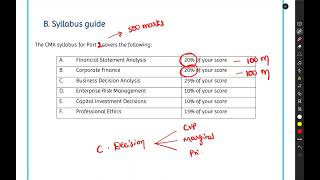
Develop advanced skills in financial statement analysis, corporate finance, and strategic decision making.
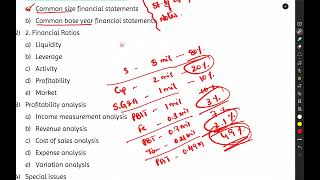
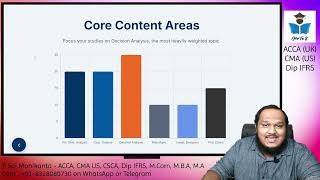
Financial Statement Analysis (20%)
Focuses on basic financial statement analysis, financial ratios, profitability analysis, and special issues.
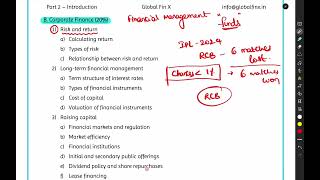
Corporate Finance (20%)
Includes risk and return, long-term financial management, raising capital, and working capital management.
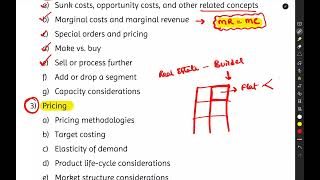
Decision Analysis (25%)
Deals with cost/volume/profit (CVP) analysis, marginal analysis, and pricing decisions.
Risk Management (10%)
Covers enterprise risk management (ERM).
Investment Decisions (10%)
Covers capital budgeting process and capital investment analysis methods.
Professional Ethics (15%)
Covers business ethics and ethical considerations for management accounting and financial management professionals, based on IMA’s Statement of Ethical Professional Practice.
Demo Lectures
- CMA US P2 - Intro00:40:40
- Section A Financial Statement Analysis00:12:38
- A.1. Comparative Financial Statement Analysis00:04:52
- A.1.1 - Common Size Financial Statements00:36:57
- A.1.2 - Common Base Year Financial Statements00:21:50
- A.1.3 - Financial Trend Analysis00:26:53
- A.2. Financial Ratios - Introduction00:12:05
- A.2.1.1 - 01. Liquidity Intro00:20:48
- A.2.1.1 - 02. Ratios and problems00:28:09
- A.2.2.1 � 1. Intro to Leverage Ratios00:13:36
- A.2.2.1 � 2. Degree of Operating Leverage00:22:05
- A.2.2.1 � 3. Degree of Financial Leverage00:20:02
- A.2.2.1 � 4. Degree of Total Leverage00:06:21
- A.2.2.2 � 01. Intro to Capital Structure00:19:15
- A.2.2.2 � 02. Capital Structure Ratios00:17:00
- A.2.2.2 � 03. Coverage Ratios00:13:50
- A.2.3.1 - 1. Intro to Activity Ratios00:08:59
- A.2.3.1 - 2. Days and Turnover Ratios00:23:07
- A.2.3.1 - 3. Cycles and Asset Ratios00:09:35
- A.2.4.1 � Profitability Ratios00:27:22
- A.2.4.2 � DuPont Analysis00:07:32
- A.2.5.1 � 1. Market Ratios00:36:03
- A.2.5.1 � 2. EPS and DPS00:20:58
- A.2.5.1 � 3. Yeild Ratios00:11:54
- A.2.6.1 � General Ratio Analysis Considerations00:21:03
- A.3.1 �Return and Profitability Concepts00:06:21
- A.3.1.1 �Recap of Return and Profitability00:19:11
- A.3.1.2 � 1. Measurement and Quality of Income00:19:43
- A.3.1.2 � 2. Revenue Relationships00:11:32
- A.3.1.3 � Analysis of Profit Margins00:06:39
- A.3.1.4 � 01. Trend and Growth Analysis00:21:29
- A.3.1.4 � 02. Sustainable Growth00:26:37
- A.4.1 - 01. Forex and Inflation00:27:57
- A.4.1 - 02. Other issues00:16:52
- B. Corporate Finance - Intro00:07:44
- B.1.1.1 - Rates of Return00:22:57
- B.1.1.2 � Risk in Finance00:09:13
- B.1.2.1 � Systematic Risk vs Unsystematic Risk00:08:58
- B.1.2.2 - Credit Risk, FX Risk, Interest Rate Risk00:11:35
- B.1.2.3 - Individual Security Risk vs. Portfolio R00:10:01
- B.1.3.1 - The Relationship Between Risk and Return00:11:00
- B.1.3.2 - Beta Definition00:09:49
- B.1.3.3 - Capital Asset Pricing Model (CAPM)00:13:45
- B.2. Long-Term Financial Management00:11:14
- B.2.1.1 � 01. Intro00:18:47
- B.2.1.1 � 02. Advantages and Disadvantages00:17:30
- B.2.1.1 � 03. Types of Bonds00:23:40
- B.2.1.2 � 01. Components and Characteristics of a00:20:29
- B.2.1.2 � 02. Bond Ratings and Yield Curve00:15:20
- B.2.1.2 � 03. Valuation of Bond00:21:07
- B.2.1.3 � Term Structure of Interest Rates00:09:34
- B.2.1.4 � Debt Issuance and Refinancing Strategies00:07:39
- B.2.1.5 � Duration of Bond- Interest Rate Sensiti00:14:45
- B.2.2 - Stocks00:30:42
- B.2.3 - Derivatives01:22:16
- B.2.4 - Other Long Term Securities00:12:14
- B.2.5 - Cost of Capital00:23:24
- B.2.6 - Valuation of Securities00:23:55
- B.3.1 - Financial Markets and Institutions01:12:48
- B.3.2 - Equity00:36:39
- B.3.3 - Debt and Leasing00:33:56
- B4. Working capital management02:25:07
- B.5. Corporate Restructuring02:12:51
- B.6. International Finance00:38:57
- 01. Introduction to Section C00:13:58
- C.1. Cost Volume Profit (CVP) Analysis00:07:06
- C.1.1.1 - Introduction to CVP and Cost Classificat00:19:28
- C.1.1.2 - Contribution Margin and Cost Behavior Ca00:10:41
- C.1.1.3 - Break-Even and Target Profit Analysis00:41:34
- C.1.1.4 - Sales Mix and Multi-Product CVP Analysis00:34:37
- C.1.2.1 - Margin of Safety00:12:58
- C.1.3.1 - Sensitivity Analysis in CVP Analysis00:16:31
- C.1.4.1 - CVP Analysis with Income Taxes00:12:38
- C.1.5.1 - Application of CVP Analysis00:05:10
- C.1.5.2 - Review and Recap00:04:52
- C.2. Marginal Analysis00:10:51
- C.2.1.1 - Cost Concepts for Decision Making00:44:44
- C.2.1.2 - Marginal Cost vs Marginal Revenue00:11:18
- C.2.2.1 - Special Order Decisions00:25:40
- C.2.2.2 - Make-or-Buy Decisions00:31:19
- C.2.3.1 - Add or Drop a Segment00:18:12
- C.2.3.2 - Sell or Process Further00:18:39
- C.2.3.3 - Capacity Constraints (Product Mix)00:16:44
- C.2.4 - Advanced Considerations00:14:22
- C3. Pricing02:13:50
- D.1. Enterprise risk00:22:46
- D.1.1.1 - Risk, Nature and Types of Risks00:38:37
- D.1.1.2 - Time and Volatility in Risk Assessment00:08:59
- D.1.2.1 - 01. Intro and Scenario00:32:40
- D.1.2.1 - 02. Capital Adequacy00:21:34
- D.1.2.2 - Expected, Unexpected, and Extreme Losses00:20:52
- D.1.2.3 - 01. Intro and Risk Identification00:13:18
- D.1.2.3 - 02. Risk Ranking00:06:52
- D.1.2.3 - 03. Risk Maps00:09:03
- D.1.2.3 - 04. Case Study00:13:01
- D.1.2.4. 01. Quantitative Risk Measures00:10:59
- D.1.2.4. 02. Value at Risk00:10:31
- D.1.3.1 - 01. Risk Response and TARA00:18:04
- D.1.3.1 - 02. Risk Transfer and Insurance00:22:43
- D.1.3.1 - 03. Inherent and Residual Risk00:07:29
- D.1.3.2 - 01. Evaluating Scenarios and Risk Strate00:12:30
- D.1.3.3 - 01. Omega Case Study00:18:44
- D.1.4.1 - Foundations of Risk Management_compress_00:36:56
- D.1.4.2 - Enterprise Risk Management (ERM) Framewo00:35:23
- D.1.4.3 - COSO Enterprise Risk Management Integrat00:24:30
- E1-0100:03:48
- E1-0200:27:08
- E1-0400:24:08
- E2-0100:35:14
- E2-0201:38:41
- E2-0300:39:31
- Section F Professional Ethics00:17:59
- F.1. Business Ethics00:02:24
- F.1.1.1 � 01. Introduction00:31:04
- F.1.1.1 � 02. Exam Tips for Business Ethics00:03:27
- F.1.1.1 � 03. Business Ethics00:14:30
- F.1.1.2 - 01. Key Ethical Concepts00:07:27
- F.1.1.2 - 02. Key Ethical Concepts00:21:53
- F.1.1.3 - 01. Fradulent Financial Reporting00:29:59
- F.1.1.3 - 02. Misappropriation of Assets00:16:42
- F.2. Ethical Considerations for Finance Profession00:06:45
- F.2.2.1 � 01. Overview of the Fraud Triangle Model00:17:37
- F.2.2.1 � 02. Using the Fraud Triangle00:18:01
- F.2.2.1 � 03. Red Flags and Conclusion00:09:23
- F.2.2.1 � 04. Scenarios on Fraud Triangle topic00:15:17
- F.2.1.1 - 01. Principles and Standards00:25:28
- F.2.1.1 - 02. Approaching Ethical Scenarios00:16:34
- F.2.1.1 - 03. Conflict of Interest00:08:25
- F.3.1 - Ethical Considerations for the Organizatio00:01:46
- F.3.1.1 - 01. Intro00:06:19
- F.3.1.1 - 02. Importance of Ethical Decision-Makin00:20:57
- F.3.1.1 - 03. Ethics in Companies00:32:27
- F.3.2.1 - Corporate Social Responsibility (CSR)00:22:09
- F.3.2.2 - Sustainability and Social Responsibility00:14:21
- F.3.3.1 - 01. Data Ethics and Protection00:26:20
- F.3.3.1 - 02. Data Ethics and Protection00:20:46
- Gamma AI - Demo00:08:56

Meet Your Tutor
Sai Manikanta Pedamallu
CMA (US), ACCA (UK), CSCA (US), Dip IFRS, AFA (UK), MIPA (Aus), M.Com, M.B.A
Sai Manikanta Pedamallu is a highly-rated CMA US Instructor and Dip IFRS Trainer with over a decade of experience in finance and education. He holds extensive qualifications, including CMA (US), ACCA (UK), CSCA (US), and Dip IFRS. In the corporate world, he serves as an ERP Product Manager and Finance Controller. Known for his dynamic teaching and practical insights, he empowers students to excel in global finance qualifications and consistently receives high student ratings.
Start Learning Now
₹30,000
This Course Includes:
- Learn from a Qualified CMA Instructor.
- Pre-recorded content accessible via laptop, PC, Android mobiles, Android Tabs, iPhones, and iPads.
- Lecture views up to 5× watch time, with 1 year's validity. Extended free until you pass — just ask.
- 24*7 tutor support on Telegram and WhatsApp.
- Soft copies of Materials provided within the Course fee.
- Digital Class Notes – Shared as PDF Files via Google Drive.
- Student shall be added to the telegram group of the subject after enrolment.